
Theologia Viatorum
Talking with God along the way

Last week, I spent each day walking the towpath between the C&O canal and the Potomac River. The canal construction began in 1828 to move cargo from the Washington DC to Ohio and back again. The whole path is 185 miles and by the time it was finished in 1850, the railroad was also finished and out performed the canal in speed and volume. The mule powered canal and path didn’t stand a chance in competition with the train and continued operation until 1924 when it could not recover from a devastating flood. Today, the towpath is part of our National Park system and protected from development so we can continue to walk in the footsteps of mules and humans who used water to move heavy loads across the land.
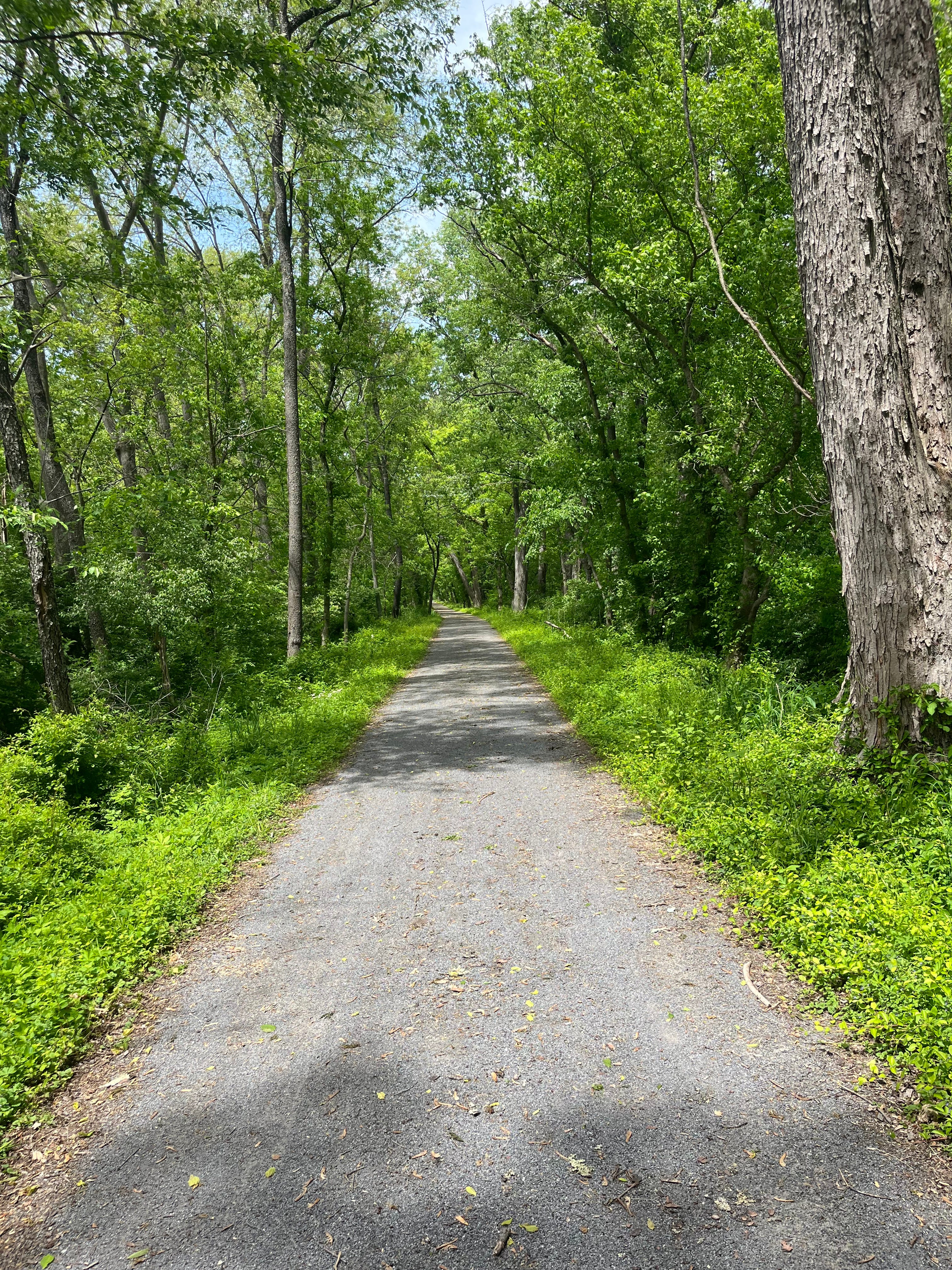
The path is flat, wide enough for two mules, and easy to follow. There are campsites along the way with water, a privy, a picnic table, and a grill. It feels pretty luxurious compared to hiking the Appalachian Trail. We started in Williamsport, MD and got off the path in Paw Paw, WV, about 56 miles total.
Potomac flows soft
Along gentle banks of mud
Held with tree root love.
I love the freedom of traveling through the natural world carrying everything I need in a pack.
I love the simplicity of being on the way without the expectation of getting anywhere or accomplishing anything.
I love what happens inside of me when I am “on the way”. It creates a spaciousness that awakens me to reality and the present moment. I feel alive to the experience of being alive. The wool of civilization is removed from my gaze and I can look more tenderly without distraction or urgency. I wake with birdsong and sleep when the frogs begin their chorus.
Except sometimes the frogs are pretty loud.
A frog chorus sings
Full throated sundown love songs,
Their silence wakes me.
I took a book with me: On the Mystery: Discerning Divinity in Process, by Catherine Keller. It is an introduction to Process Theology that takes on the rigidity and certainty of other systems of theology with a wide gaze and companionable gate to explore uncertainty and the chaos of our lives. I love her writing and her invitation into a relational theology of process that invites all creation into co-creating with a God who is also “on the way.”
You see, so much of Christian theology is an attempt to create certainty and a firm foundation of knowing God to be all powerful, all knowing, fixed, eternal, and outside of the chaos of creation. I have always struggled with theologies that create a dualism between God and Creation. I am much more comfortable with a God who gets into the messiness with us. A God who walks with us on the way and can be genuinely surprised by how things turn out. A God who lovingly enters into creation with a vocation to love, heal, and connect with us is a God who does not control us or any part of creation.
In my theological imagination, God is pregnant with creation and there is a deep loving relationship between the mother and the creation in her womb… but she cannot reach in and alter the course of life in the womb. She has consented to house life within her divine body and allow the mystery to unfold. This means that she walks with us on the way, and she is the way, and together we see what emerges in our co-creation. Sometimes it is healing and communion and loving-kindness. And sometimes it is trial and judgement and crucifixion. No matter what, we are in process and God keeps choosing to reveal an eternity of compassionate connection that looks like the resurrected one, the awakened one, the one able to be deeply present without controlling or forcing or threatening destruction.
“On the way” can be a deeply distressing theology if we need to know where we are going. Where is the fixed destination so we can know that we have arrived? The disciples want to know where Jesus is going. Show us the Father. Reveal to us the destination. The way, the path, the chaos and uncertainty of what is around the bend is too difficult. Often, we want to trade in the mystery for some certainty. There have been chapters in my life when I deeply needed some certainty in order to keep showing up in the midst of the chaos of creation and crucifixion and re-creation.
Process theology, especially as Keller describes it, is a more honest path to discover our deeply holy and rooted relationship with God and all creation. It isn’t a path of certainty or rigidity, we have to be capable of walking in the way of uncertainty and stay present. It isn’t a path of infinitely regressive individual relativism, either. It is a path of relational order and trusting that the truth of our God will be revealed in relationships that emerge as we are in process with each other.
It occurred to me on the towpath that this kind of theology has required me to develop a contemplative practice of stillness. I must grow within my nervous system the capacity to experience everything, push away nothing, and allow my conscious contact with the flow of life to shape me into a more awake and true version of myself. The contemplative practice carves away distraction and the tyranny of reactivity so that I can be present for all that emerges on the way. Process theology requires an open and expansive capacity to remain lovingly present and then, whatever happens, happens.
We stay connected on the way.
We stay in conversation on the way.
We push away nothing. We grasp onto nothing. We welcome everything.
We stay open and loving on the way.
We learn what it means to love one another as God loves us.
We are on the way with God, walking the path, carrying only what we need for the day ahead and trusting in the mystery of what happens next because process is the pattern of God’s way.
What a wondeful sharing, Adrien. May God bless your pilgrimage.